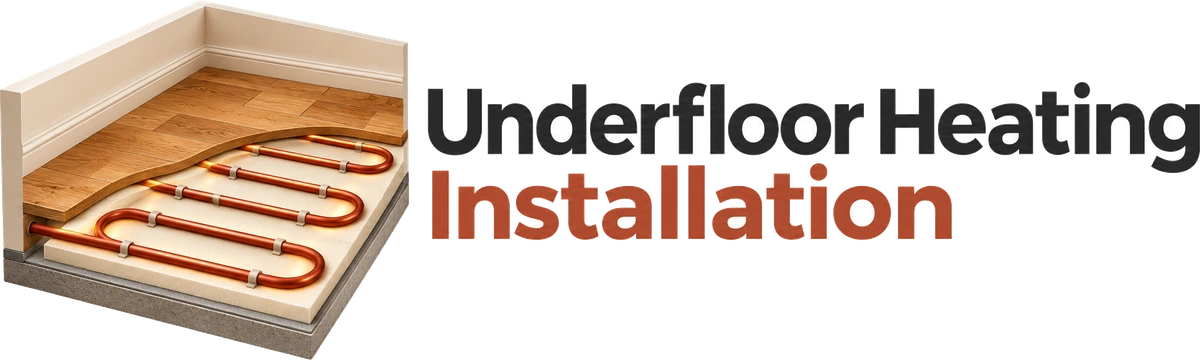
Liquid screed for underfloor heating: 50mm depths, drying & commissioning
Flowing liquid screed (calcium-sulphate anhydrite or free-flowing cementitious screed) is the gold-standard cover for hydronic underfloor heating.
Free, no obligation. One vetted local installer prices your floor — never shared with a calling list.
50mm liquid screed vs 75mm traditional sand-and-cement
| Specification | Flowing Anhydrite Liquid Screed | Flowing Cementitious Liquid Screed | Traditional 4:1 Sand & Cement Screed |
|---|---|---|---|
| Minimum depth over 16mm UFH pipe | 50mm total (34mm over pipe) | 50mm total (34mm over pipe) | 65mm–75mm total (50mm+ over pipe) |
| Thermal conductivity (λ) | 2.0 – 2.5 W/mK | 1.8 – 2.2 W/mK | 1.0 – 1.2 W/mK (air voids reduce contact) |
| Typical Irish supply & pump rate | €22–€32/m² (for 80–120 m²) | €24–€34/m² (for 80–120 m²) | €20–€30/m² |
| Walk-on time after pour | 24–48 hours | 24–36 hours | 3–5 days |
| Earliest UFH commissioning start | 7 days after pouring | 7–14 days after pouring | 21–28 days after laying |
| Surface laitance sanding needed? | Yes (light orbital sand at 7–14 days) | Light buff / brush before tiling | No laitance skin, but rougher surface tolerance |
| Expansion bay joints required | Up to 300 m² per bay on UFH | Every 30–40 m² (doorway saw cuts) | Every 25–35 m² |
For standalone commercial or domestic floor screeding without pipework installation, see our specialist sister guide at liquidscreed.ie.
How to prepare UFH pipes so they never float during a liquid pour
Because liquid screed is pumped as a fluid slurry and dappled with a tamping bar, any loose insulation board or unclipped pipe will try to float upwards during the pour. Before the screed pump lorry arrives, every underfloor heating installer must complete four checks:
- Tank the floor insulation like a swimming pool: Lay a continuous 500-gauge polythene separating membrane (with all overlaps taped by 100mm) over the foil-faced PIR insulation and up against the 8mm–10mm perimeter edge strip so liquid screed cannot leak underneath the boards and float them.
- Double-clip all pipe bends at 250mm–300mm centres: Straight runs are stapled every 400mm–500mm with barbed 40mm–60mm tacker clips or locked into clip rail, and every 180° return bend is double-clipped so pipes stay flat on the floor.
- Fill loops with water & lock at 6 bar pressure: Water-filled pipes are much heavier than air-filled pipes and resist buoyancy, while the 6-bar manifold gauge proves every loop is watertight during the pour.
- Fit doorway foam expansion profiles: Place foam movement joints across every doorway threshold where separate heating zones meet.
The 7-day commissioning & force-drying cycle (EN 1264-4)
Natural drying of a floor screed takes roughly 1 day per millimetre up to 40mm depth (and 2 days per mm above 40mm) in good ventilation — meaning 50mm takes around 60 days naturally. However, with liquid screed you can switch on the underfloor heating manifold after just 7 days to force-dry the slab cleanly:
- Days 1–3 of commissioning: Set the manifold flow temperature to 20°C–25°C and hold continuously for 72 hours.
- Days 4–7+: Raise the flow temperature by 5°C per day up to your maximum design temperature (e.g. 40°C–45°C) and hold for at least 4 to 7 days with windows cracked slightly open (or dehumidifiers running) so evaporated moisture escapes the building.
- Cool down before floor laying: Step the temperature back down by 5°C per day and switch the heating completely off 48 hours before moisture-testing (<75% RH / <0.5% CM) and laying tiles or engineered wood.
Get your underfloor heating priced in 4 quick taps
Tell us about your floor and heat source. Your request goes to one vetted underfloor heating installer covering your county, who rings you back to discuss pipe spacing, manifold zones and screed depth before giving a written quote.
Underfloor heating installation guides & specifications
Detailed Irish engineering & cost guides covering pipe spacing, manifold balancing, 15mm retrofit overlays, 35°C heat pump commissioning and floor coverings.
More technical resources: Liquid screed for underfloor heating · All guides & calculator hub · Technical trade glossary (A–Z) · Frequently asked questions · All 26 counties covered
Liquid screed for UFH: common questions
Why does anhydrite liquid screed need sanding before tiling?
As calcium-sulphate liquid screed settles and dries, fine binder particles rise to the top 1mm to form a weak, powdery crust called laitance. Running a rotary floor sander with a 60-grit silicon-carbide disc 7 to 14 days after the pour removes this skin, accelerates moisture evaporation and exposes a solid mechanical key for tile primer.
Can anhydrite screed be used in a wetroom or walk-in shower?
Calcium-sulphate (anhydrite) screed should not be used in un-tanked commercial wet areas or laid to steep shower falls. In bathrooms with a preformed shower tray or a fully tanked waterproofing membrane it is fine; for wetrooms with a floor gully fall, a cementitious screed or preformed wetroom deck board is used.
How thick is liquid screed over 16mm underfloor heating pipes?
In domestic properties across Ireland, liquid screed is poured to a nominal total depth of 50mm (giving 34mm of screed cover above the top of a 16mm pipe, meeting BS 8204-7 minimum cover requirements).
Underfloor heating installation across all 26 counties
Every quote request is routed to one vetted underfloor heating installer covering your county — from Dublin, Cork, Galway and Limerick to Kildare, Meath, Wicklow, Wexford, Louth, Kerry, Clare, Waterford and Donegal. Pick your county for local housing, heating and radon figures. View full 26-county directory →
Ready to price your underfloor heating installation?
Four quick taps and your phone number. One vetted underfloor heating installer covering your county rings you with a clear written quote.